
Plant-Based Food Growth in 2026: What the Numbers Actually Say
As an Amazon Associate, I earn from qualifying purchases. Read the full disclosure here.
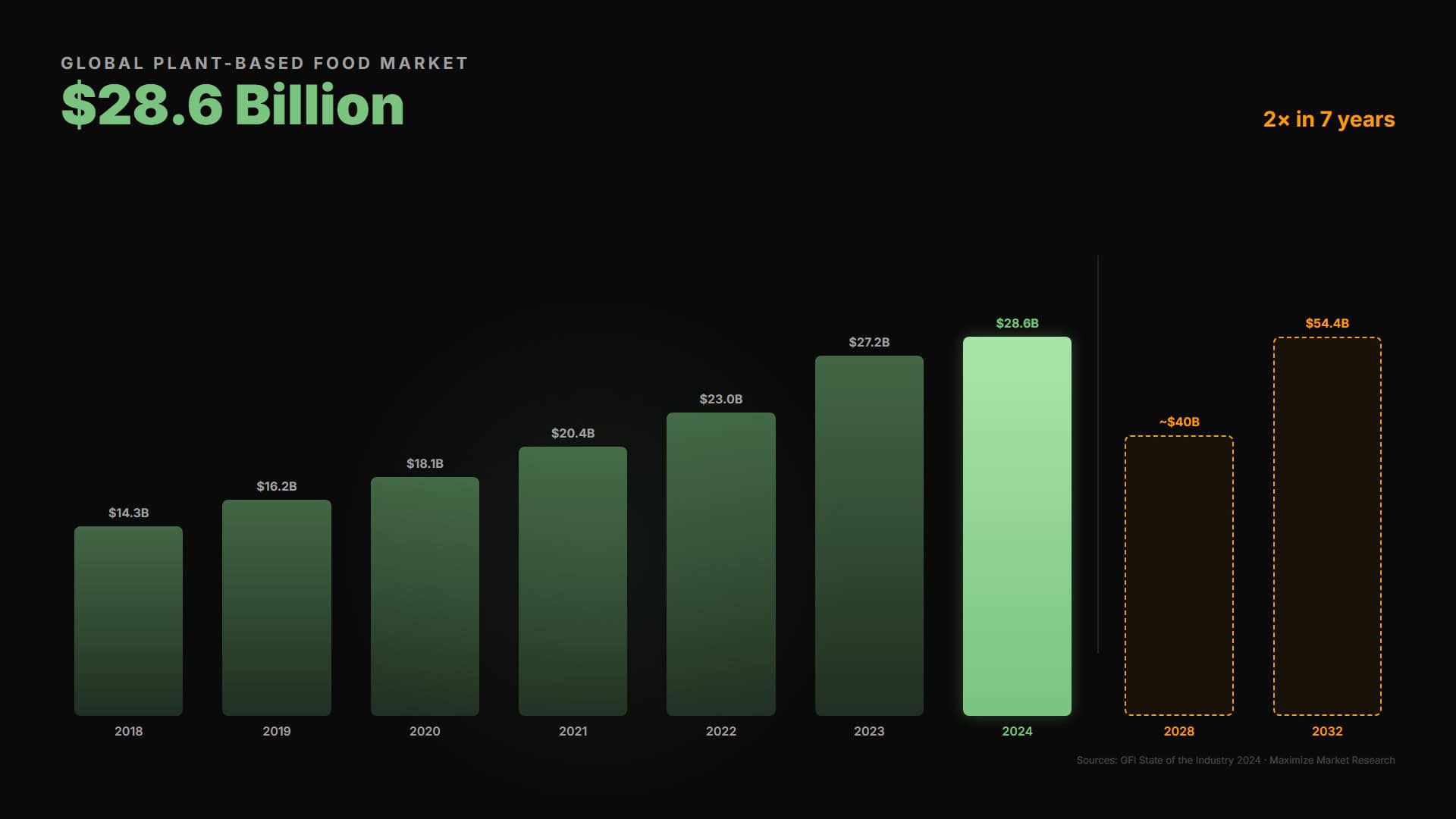
$28.6 billion. That’s how much the world spent on plant-based food in 2024, according to the Good Food Institute’s State of the Industry Report. That number doubled in seven years. And in January 2026, 30 million people signed up for Veganuary, a record that blew past the previous year by 16%.
So is plant-based food growing or dying? The data answers that clearly: the global plant-based market is growing at roughly twice the rate of conventional meat. The real story in 2026 isn’t explosive retail hype. It’s that plant-based food has moved past the trend phase into something more significant: institutional adoption, mainstream integration, and a generational shift in how people eat.
The Global Plant-Based Food Growth Numbers
The global plant-based food market hit $28.6 billion in retail sales in 2024, a 5% increase from 2023 (GFI 2024 State of the Industry Report). Plant-based dairy alternatives make up the largest share at $22.4 billion, with plant-based meat and seafood at $6.1 billion. Both categories grew year over year.
Europe leads with $9.7 billion in sales, followed by Asia-Pacific at $8.9 billion and North America at $7.3 billion. Asia-Pacific is the one to watch. The region is growing fast, driven by countries like China, South Korea, and Japan investing heavily in alternative proteins.
Market projections from Maximize Market Research estimate the plant-based food market size will reach $54.4 billion by 2032, growing at an 8.67% compound annual rate. That trajectory puts plant-based food on track to nearly double again within the next eight years. For context, the overall food industry grows at about 4-5% annually. Plant-based food sales consistently outpace that benchmark.
What’s Actually Selling in the Plant-Based Market in 2026
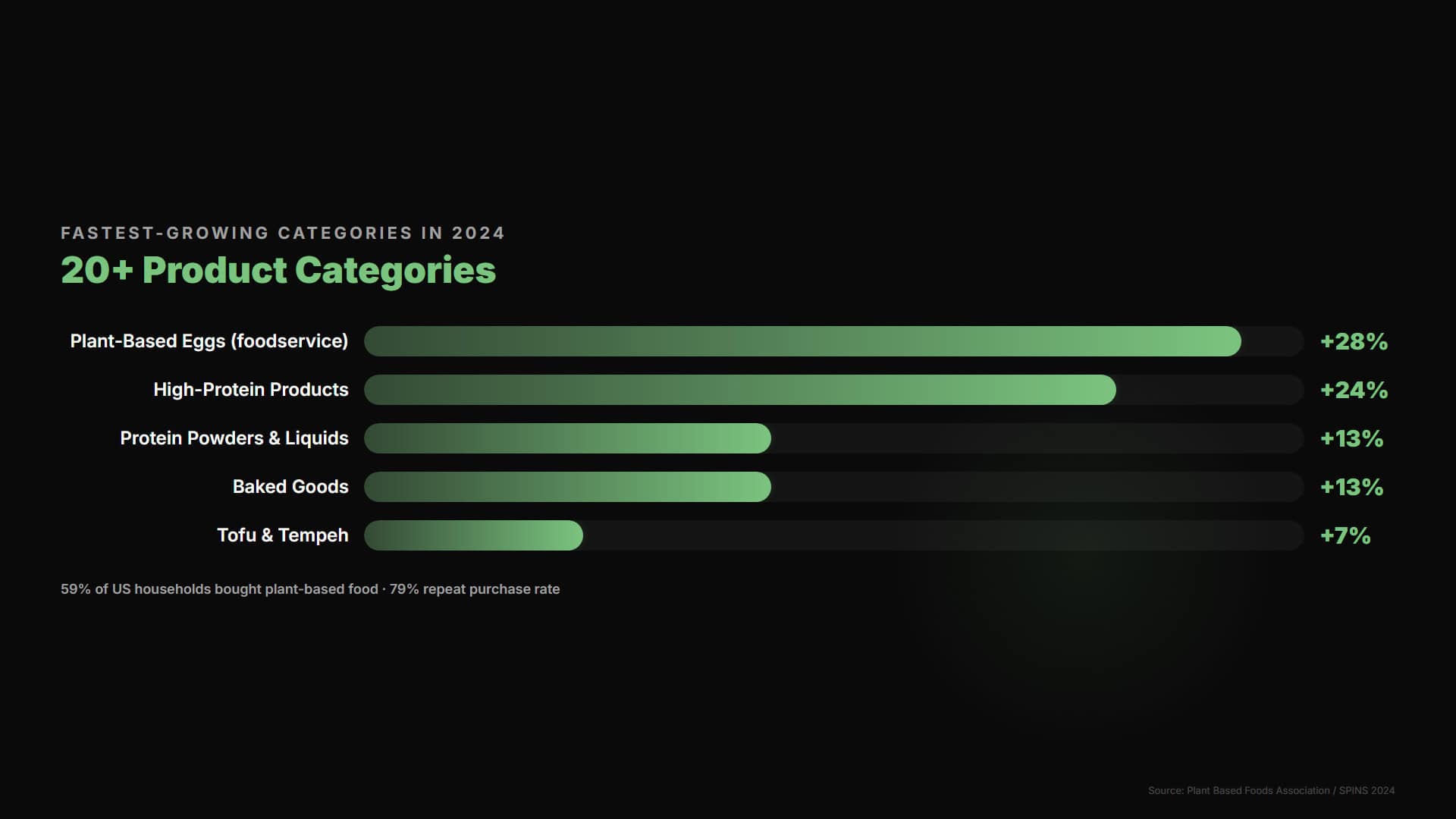
The plant-based market has changed dramatically since Beyond Burgers first hit grocery shelves. In 2018, the industry covered about 6 product categories. Today, it spans more than 20, from plant-based eggs to tempeh-based proteins to dairy-free baked goods.
The fastest-growing plant-based food categories in 2024 tell a story that goes well beyond burgers. Plant-based protein powders and liquids grew 13% in unit sales, reaching $450 million. Baked goods jumped 13%. Tofu and tempeh climbed 7%. And plant-based eggs in foodservice surged 28%. High-protein plant-based products overall grew 24%.
Here’s what matters most for understanding plant-based food trends in 2026: 59% of US households purchased plant-based foods in 2024, according to the Plant Based Foods Association. The repeat purchase rate sits at 79%. And 96% of households that bought plant-based meat also bought animal-based meat. These aren’t vegans driving the numbers. It’s mainstream consumers adding plant-based options to their regular shopping.
Now, the honest part. US plant-based meat retail dropped 7% to $1.2 billion in 2024. Plant-based milk dipped 5%. SPINS analysts describe this as the market “evolving, not dying,” a transition from initial hype to sustainable mainstream integration. The market diversified beyond fake burgers into whole-food protein bowls, baked goods, and pantry staples. That’s not decline. That’s maturation.
Hospitals, Universities, and Restaurants Are Making the Switch
This is where the plant-based growth story gets undeniable. Institutions don’t follow fads. They follow data, budgets, and demand.
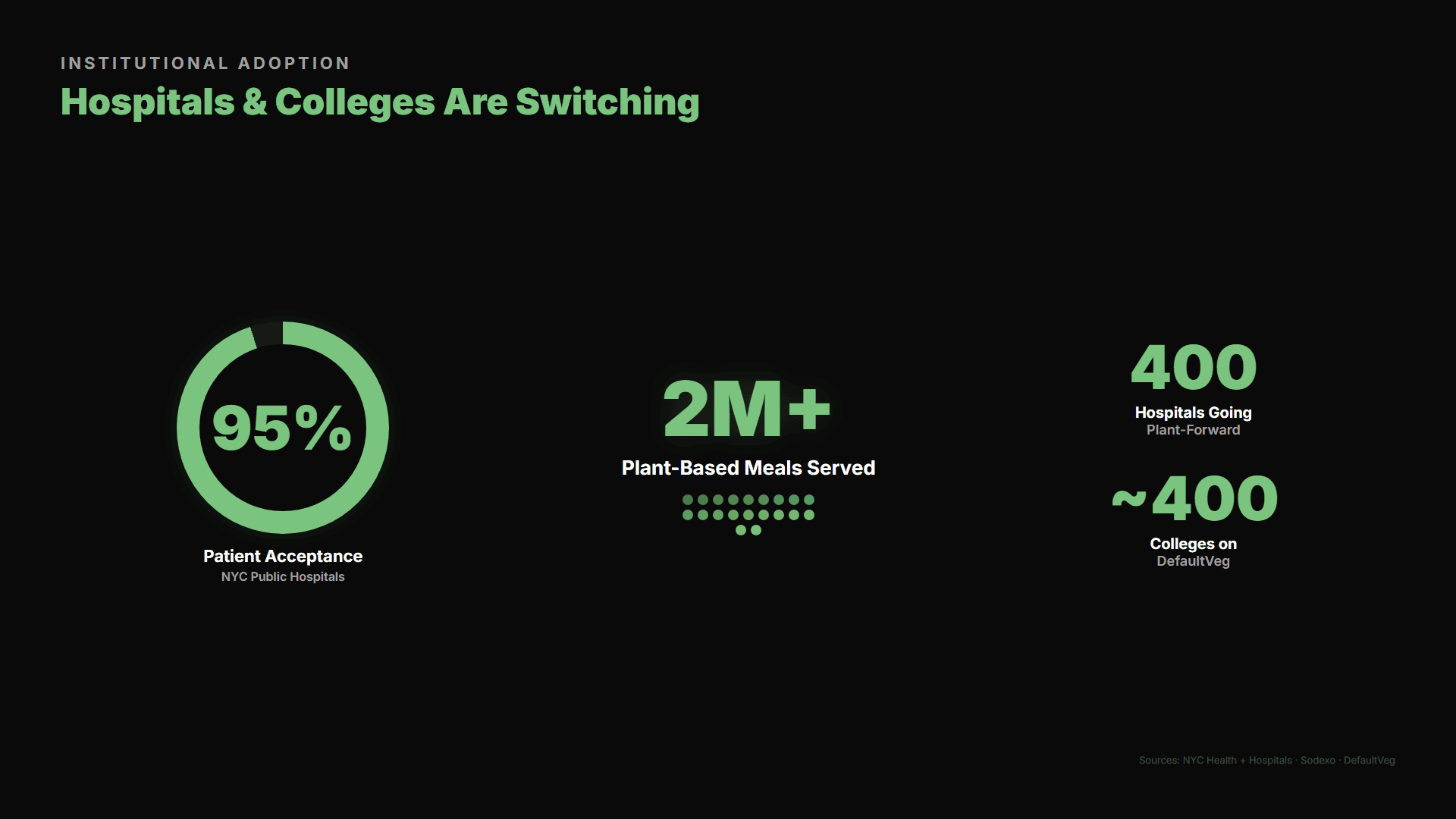
NYC Health + Hospitals made plant-based meals the default option at all 11 public hospitals. They’ve served over 2 million plant-based meals. The results: 95% patient acceptance, over 90% satisfaction, a 36% reduction in emissions, and $0.59 in savings per meal. When the largest public hospital system in the US changes its default and the patients prefer it, that tells you something.
Sodexo is expanding plant-forward menus to 400 US hospitals by the end of this year. Emory University Hospital removed beef, pork, and lamb from patient trays entirely. Nearly 400 colleges across North America have adopted DefaultVeg programs, where plant-based is the standard option and students opt into meat rather than out of it. The University of Colorado Boulder is targeting 75% plant-based dining and holds the #1 ranking from the Humane Society. Sodexo set a target of 50% plant-based college menus by 2025.
Restaurant chains are following. Panda Express made Beyond Orange Chicken a permanent menu item. Starbucks added a plant-based protein breakfast sandwich and dropped the surcharge for plant milks. Shake Shack launched the Veggie Shack 2.0. Taco Bell rolled out vegan nacho cheese sauce nationwide. Some chains have pulled earlier options, so the trend is mixed at the individual brand level. But the direction across the industry is clear.
The Generational Shift Driving Plant-Based Food Statistics
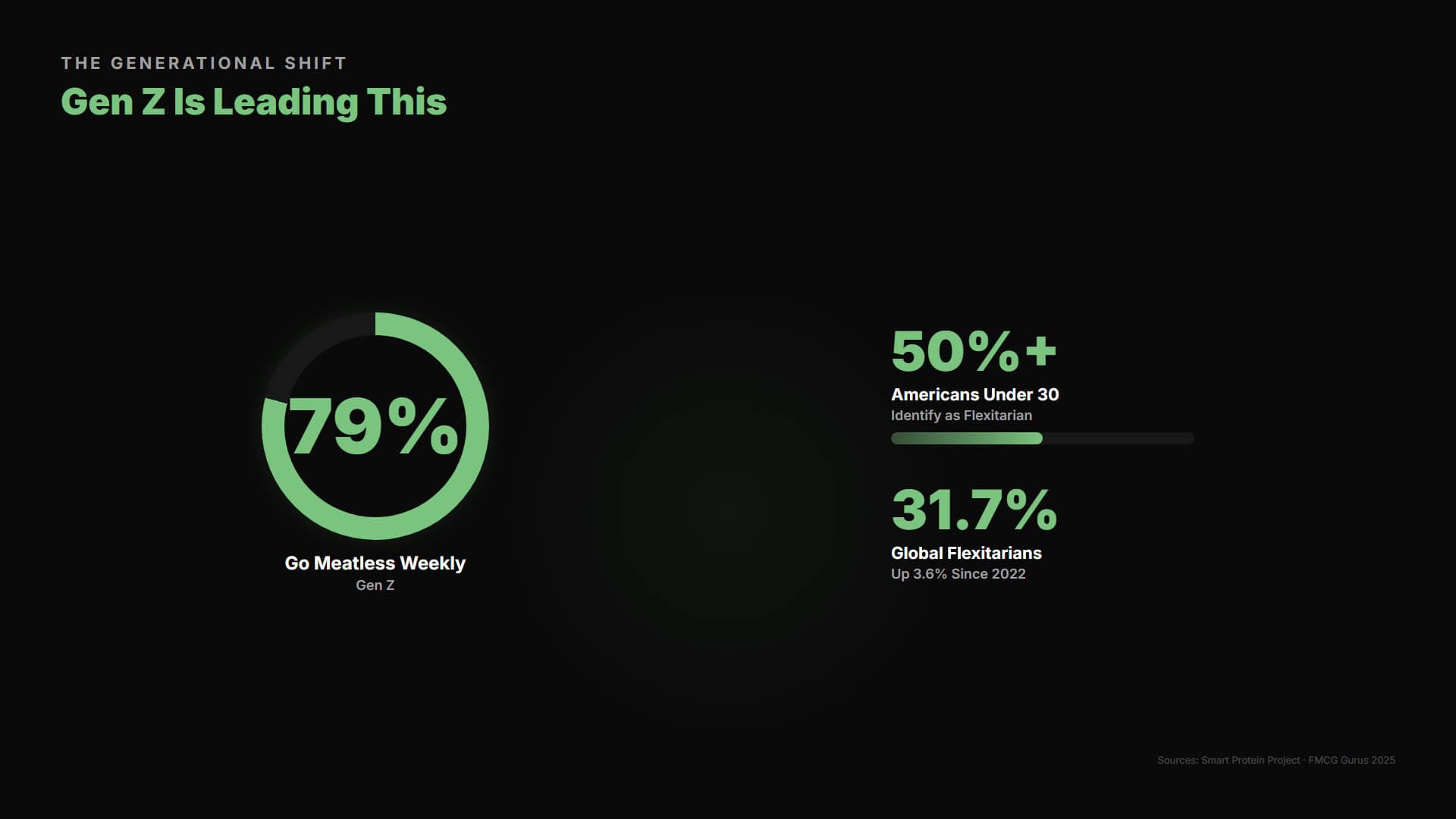
The demographics behind the fastest growing food category tell you where this is heading. Gen Z plant-based adoption leads every other generation. In Europe, they have the highest rates of veganism (4%) and vegetarianism (7%) of any generation, according to the Smart Protein Project. 79% of Gen Z go meatless at least one day a week. More than half of Americans aged 24-29 identify as flexitarian. Gen Z and Millennials are twice as likely to choose plant-based when dining out.
This isn’t limited to younger consumers. Globally, 31.7% of consumers identify as flexitarian, up 3.6% since 2022 (FMCG Gurus 2025). 68% of respondents said they want more plant-based foods in their diet. 82% of nutrition experts surveyed by Nutrition Hub in 2025 see flexitarianism continuing to rise.
In Europe, the shift is even more pronounced. Per capita meat consumption has declined 19% since 2010 (OECD-FAO data via Sentient Media). 28% of Europeans consume plant-based alternatives at least once per week, up from 21% in 2021. Germany, the largest European market at 1.68 billion euros, has a 40% flexitarian identification rate. France saw 8.8% growth. Italy’s plant-based cheese volume jumped 43.2% from 2022 to 2024.
When you look at a simple lentil bolognese sitting next to the meat version in a German supermarket, you’re not looking at a niche product anymore. You’re looking at a market that nearly half the population considers their normal way of eating.
The Dairy Industry Decline in Numbers
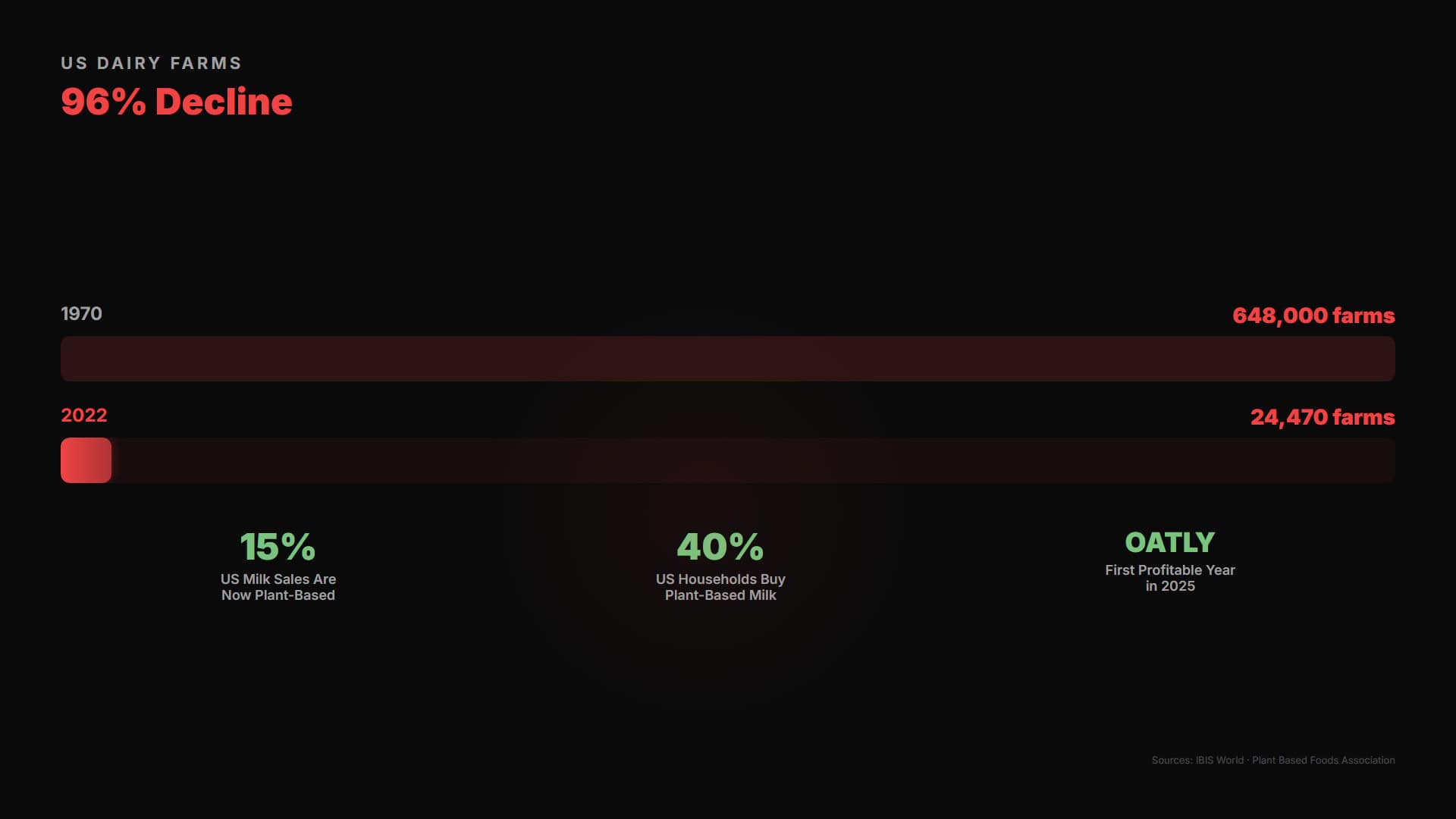
The dairy industry’s trajectory is part of this story. The US went from 648,000 dairy farms in 1970 to 24,470 in 2022 (IBIS World). Another 2,800 are projected to close in 2025. Wisconsin lost nearly half its dairy farms between 2003 and 2020. Texas went from 1,200 to 351, a 71% drop. The all-milk price is predicted to fall about 11% in 2026.
Meanwhile, plant-based milk holds roughly 15% of US retail milk dollar sales at about $2.8 billion, with around 40% of US households buying it regularly. In the UK, oat milk represents about 40% of plant-based milk volume and is still rising at 7.2% year over year. And Oatly achieved its first full year of profitability in 2025, a milestone that signals the plant-based market in 2026 has shifted from “can these companies survive?” to “these companies are profitable.”
The homemade plant-based options are getting better too. The plant-based egg price premium narrowed from 317% to 110%. Taste as a purchase driver rose from 23% to 36% year over year (PBFA data). The products are improving, prices are dropping, and the gap between plant-based and conventional keeps closing.
Frequently Asked Questions
Is plant-based food growing or shrinking?
Globally, the plant-based food market is growing. It reached $28.6 billion in 2024 and is projected to hit $54.4 billion by 2032. The global market grows at roughly twice the rate of conventional meat. Some specific US retail subcategories like plant-based meat and milk saw declines in 2024, but the overall market has expanded into 20+ categories. Analysts describe this as market maturation rather than decline.
What’s the fastest-growing plant-based food category?
In 2024, plant-based eggs in foodservice grew 28%, making it the fastest-growing subcategory. High-protein plant-based products overall grew 24%. Plant-based protein powders and baked goods each grew 13% in unit sales. The growth has shifted away from plant-based meat substitutes toward a broader range of categories including whole foods, baked goods, and protein products.
How many people are going vegan or plant-based in 2026?
30 million people participated in Veganuary 2026, a 16% increase over 2025. Gen Z has the highest veganism rate at 4% and vegetarianism at 7%. Globally, 31.7% of consumers identify as flexitarian. In Europe, 28% of consumers eat plant-based alternatives at least weekly, up from 21% in 2021. The broader trend is toward flexitarian eating rather than strict veganism, with over half of Americans aged 24-29 identifying as flexitarian.
Is plant-based food cheaper than meat?
It depends on the product. Whole-food plant proteins like beans, lentils, tofu, and tempeh are consistently cheaper per gram of protein than meat. Processed plant-based alternatives can cost more, though the price gap is narrowing. Plant-based egg alternatives dropped from a 317% price premium to 110%. In institutional settings like NYC hospitals, plant-based meals save $0.59 per meal compared to conventional options. Private-label plant-based products in Europe are also driving costs down significantly.
Where This Is Headed
The plant-based food industry doesn’t need a comeback because it never left. The 2026 story isn’t about whether people are buying more veggie burgers this quarter. It’s about hospitals changing their default meals and saving money doing it. It’s about 400 colleges telling students that plant-based is the standard option. It’s about an entire generation that considers eating less meat a normal part of how they live. The question stopped being “will plant-based food catch on?” a while ago. The numbers say it already did.
Follow me on Instagram for more vegan content and recipes. Share this post on Pinterest and Facebook!