Why 84% Quit Vegan — And What Successful Vegans Do Differently
As an Amazon Associate, I earn from qualifying purchases. Read the full disclosure here.
According to a study by Faunalytics that surveyed over 11,000 U.S. adults, 84% of people who try a vegetarian or vegan diet eventually go back to eating animal products. More than a third quit within the first three months. That stat sounds terrible for veganism, but it’s misleading. Most of these people were trying a plant-based diet, not actually going vegan. And the most common reason they felt bad? They weren’t eating enough food.
In 2026, with more people identifying as flexitarian and several high-profile celebrities stepping away from veganism, the conversation around quitting has only gotten louder. This post breaks down why people really quit being vegan, what they’re getting wrong nutritionally, and why the fix is simpler than most people think.

Vegan and Plant-Based Are Not the Same Thing
Veganism is an ethical stance. It’s the belief that animals deserve not to be exploited for food, clothing, entertainment, or anything else. The Vegan Society has defined it this way since 1988, and it extends beyond diet to every consumer choice you make.
Plant-based is a diet. It means eating mostly or entirely foods from plants. A plant-based eater might still wear leather, visit zoos, or use products tested on animals. There’s no ethical framework attached.
This distinction matters because the Faunalytics data shows that people motivated by ethics stick with it dramatically longer than people who do it for health alone. In fact, the only motivation cited by a majority of former vegetarians and vegans was health at 58%. Current vegans, by contrast, cited animal protection, health, environment, and food preferences simultaneously. Multiple motivations keep people committed. A single health motivation doesn’t.
So when someone says “I tried going vegan and it didn’t work,” they almost always mean they tried eating plant-based and felt bad. That’s a very different thing.
Why People Feel Bad on a Plant-Based Diet
The top reason people quit a plant-based diet is food dissatisfaction at 32%, followed by health concerns like fatigue and weakness at 26%. Both of these come back to the same root cause: not eating enough calories.
Plant foods are significantly less calorie-dense than animal products. For example, chicken breast has about 165 calories per 100 grams. Broccoli has 34. Cheese can hit 400. You can’t swap animal products out, eat the same volume of food, and expect to feel fine. You’ll end up in a serious calorie deficit without realizing it.
One study found that people eating a plant-based diet naturally consumed about 700 fewer calories per day compared to other diets, without intentionally restricting. That kind of deficit causes fatigue, brain fog, irritability, feeling cold, and even hair loss. These are textbook symptoms of under-eating, not symptoms of “veganism not working.”
The fatigue hits, the brain fog sets in, and people conclude that plant-based eating itself is the problem. It’s not. They’re just not eating enough.

What Undereating on a Vegan Diet Actually Looks Like
Here’s what a typical beginner day looks like compared to a properly planned one.
Beginner day (~1,100 calories):
- Breakfast: Oatmeal with banana and water (300 cal)
- Lunch: Large salad with greens, tomatoes, cucumber, and lemon dressing (200 cal)
- Dinner: Stir-fried vegetables with soy sauce over a small bowl of rice (400 cal)
- Snack: An apple (95 cal)
Properly planned day (~2,200 calories):
- Breakfast: High-protein oatmeal with peanut butter, chia seeds, and soy milk (550 cal, 50g protein)
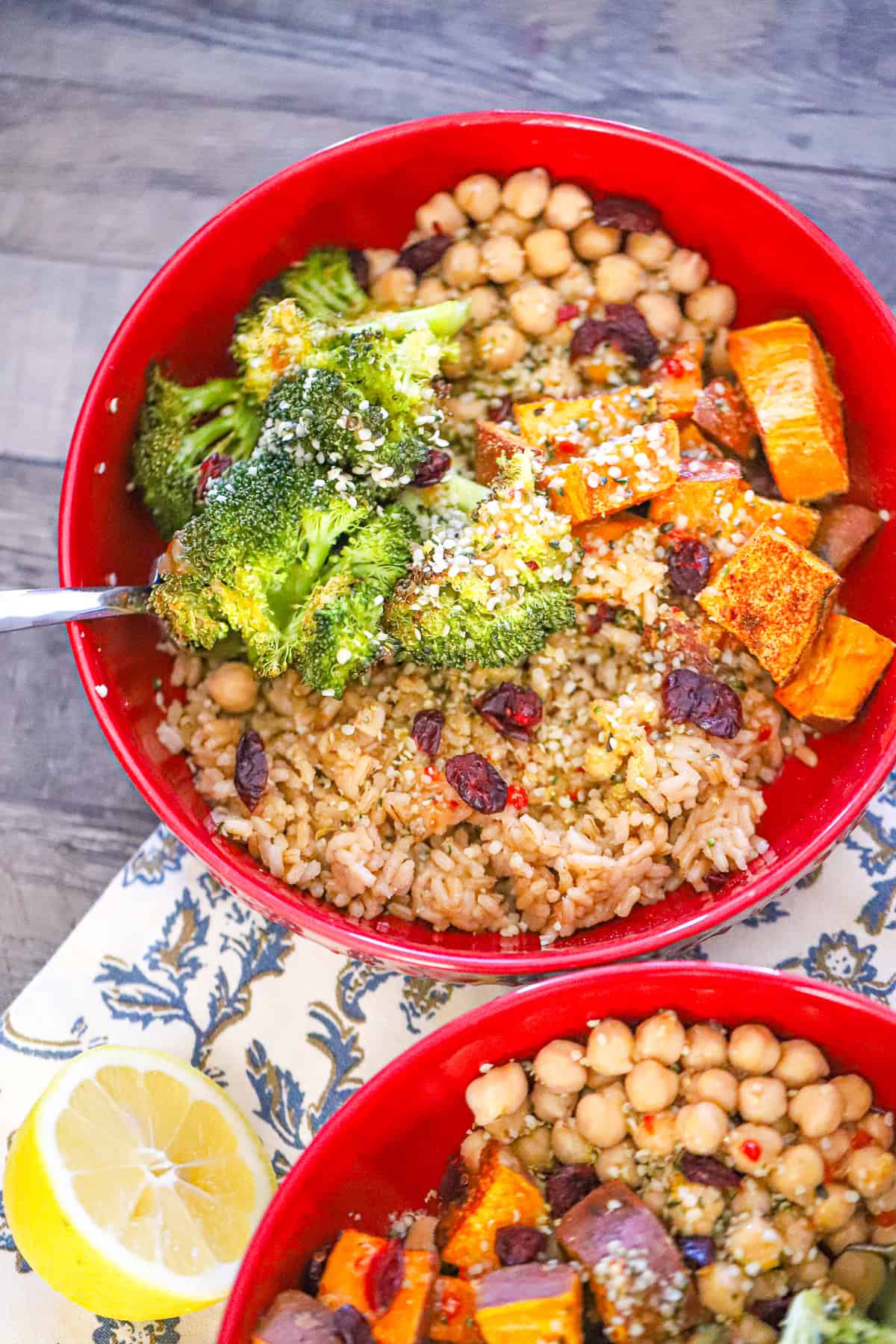
- Lunch: Grain bowl with brown rice, black beans, avocado, roasted sweet potato, and tahini dressing (700 cal)
- Dinner: Chickpea and tofu curry with brown rice (650 cal, 25g protein)
- Snack: Apple with almond butter and a handful of trail mix (350 cal)
The second day isn’t more meals. It’s the same number of meals with calorie-dense additions: nut butters, avocado, tahini, seeds, and real portions of grains and legumes. The beginner version is basically vegetables and fruit with a little starch. That’s a crash diet, not a lifestyle.
Simple Swaps That Add Hundreds of Calories
Small changes close the calorie gap fast:
- Cook oatmeal in soy milk instead of water: +100 calories
- Use tahini dressing instead of lemon juice on salads: +175 calories
- Add 2 tablespoons of peanut butter to breakfast: +190 calories
- Eat your apple with almond butter instead of plain: +195 calories
- Drizzle olive oil on finished dishes: +120 calories per tablespoon
- Top bowls with hemp seeds and avocado: +135 calories
Three tablespoons of nut butter spread across your meals is the difference between 1,600 and 2,200 calories. The meals look almost identical. A peanut butter banana baked oatmeal for breakfast, a grain bowl for lunch, and a walnut bolognese for dinner will get you well over 2,000 calories without any extra effort.
If meal planning feels overwhelming, tools like MealThinker can build balanced vegan meal plans around your calorie and protein targets automatically.

Nutrients Every Vegan Needs to Know About
Beyond calories, a few nutrients need deliberate attention.
B12 is the non-negotiable supplement. Plant foods don’t contain reliable amounts of it, and studies show that 43% of vegan young adults are deficient. Deficiency causes fatigue, weakness, and neurological symptoms that people incorrectly blame on the diet itself. Take a B12 supplement daily or eat fortified foods consistently.
Plant-based iron (non-heme) absorbs less efficiently than iron from meat. So pair iron-rich foods like lentils, spinach, and chickpeas with vitamin C sources like citrus, bell peppers, or tomatoes. Also avoid drinking coffee or tea with iron-rich meals, because tannins block absorption.
Omega-3s come from flaxseeds, chia seeds, hemp seeds, and walnuts. A tablespoon of ground flaxseed in your morning oatmeal covers the basics.
Vitamin D and calcium are handled by fortified plant milks and some sun exposure. If you’re drinking fortified soy milk daily, you’re probably getting enough of both.
None of this is complicated. It just requires a little awareness during the first few weeks.
Why Ethical Vegans Don’t Quit
The Faunalytics data reveals something worth paying attention to: people who go vegan for the animals stay vegan at dramatically higher rates than people who do it for health. Ethical vegans report stronger conviction, consume fewer animal products overall, and maintain the lifestyle for years longer.
Research in moral psychology helps explain why. For ethical vegans, eating animal products doesn’t register as a temptation to resist. It registers as something that simply isn’t an option. Academics call this “moral impossibility.” Once someone genuinely recognizes animals as morally relevant, willpower becomes irrelevant. You don’t need willpower to avoid doing something you find fundamentally wrong.
As law professor Gary Francione puts it: “If animals matter morally, veganism is not an option. It is a necessity.”
So if you’re struggling to stay plant-based, the missing piece might not be more protein or better recipes. It might be a stronger reason for doing it in the first place. The nutritional side is genuinely straightforward once you spend a few weeks learning the basics. But a diet without a deeper purpose will always feel like a restriction. An ethical commitment doesn’t.

Frequently Asked Questions
Can you get enough protein on a vegan diet?
Yes. Legumes, tofu, tempeh, seitan, nuts, seeds, and whole grains all provide substantial protein. A well-planned vegan day easily hits 70 to 100+ grams. For specific meal ideas, check out these 50 high-protein vegan recipes.
Why am I always hungry after switching to plants?
You’re probably not eating enough calories. Because plant foods are less calorie-dense than animal products, you need larger portions or calorie-dense additions like nuts, nut butters, avocado, and oils at every meal. The swaps section above has quick fixes that add hundreds of calories without changing your meals much.
Is it normal to feel tired at first?
Some fatigue during the first 2 to 4 weeks is normal as your gut adjusts to higher fiber intake. Bloating and digestive discomfort are also common early on because your microbiome needs time to adapt to more fiber. However, if tiredness persists beyond that, you’re likely under-eating or missing key nutrients like B12 or iron. A daily B12 supplement and more calorie-dense foods usually resolve it quickly.
What percentage of vegans go back to eating meat?
According to the Faunalytics study, 84% of people who tried a vegetarian or vegan diet eventually returned to eating animal products. But that number includes anyone who tried it even briefly. More than a third quit within three months, and most had no involvement in any vegan community. People motivated by animal ethics had significantly higher retention rates than those who did it for health alone.
What’s the difference between vegan and plant-based?
Veganism is an ethical stance that opposes animal exploitation in all forms, not just food. Plant-based refers to a diet centered on foods from plants. Most people who “try going vegan” for health reasons are actually trying a plant-based diet, which is why understanding this distinction matters when looking at dropout rates.
Is veganism declining?
Strict veganism has cooled slightly, with more people identifying as flexitarian instead. But plant-based food sales continue to grow, and the ethical foundation of veganism remains strong. What’s declining is the treat-it-like-a-diet approach to veganism, which is exactly the approach that leads to quitting. People who go vegan for the animals aren’t part of that trend.
If you’ve tried eating plant-based and struggled, the problem almost certainly wasn’t the plants. Most people who quit being vegan were never really vegan to begin with, and nearly all of them were under-eating. Add calorie-dense staples to every meal, supplement B12, and give your body a few weeks to adjust.
And if you want a reason to stick with it that goes beyond how you feel physically, spend some time learning about the animals. That’s the part that makes it last.
Follow me on Instagram for more vegan recipes and tips. Share this post on Pinterest and Facebook if you found it helpful!
High-Protein Vegan Recipes to Get You Started
If you’re looking for meals that actually keep you full and hit your calorie targets, start here: